Paid Search
3 July 2026
Paid Marketing: The Beginner’s Guide to Understanding and Setting Up a Paid Marketing Strategy (Infographic)
Paid marketing refers to any strategy in which a brand targets potential customers based on their interests, intent or previous interactions with the brand.

When you search for something on Google, the first thing you’ll see in the search engine results pages (SERPs) won’t always be an organic website listing. Whether you’re performing a quick Google search for a nearby restaurant or researching enterprise software, the layout of the page will often prioritize sponsored results.
It won’t always be a SERP feature (a featured snippet or a “People also ask” listing) either.
In fact, there’s only one thing that can outrank both: an ad — the most immediate form of digital advertising available right in the heart of the search engine SERPs.
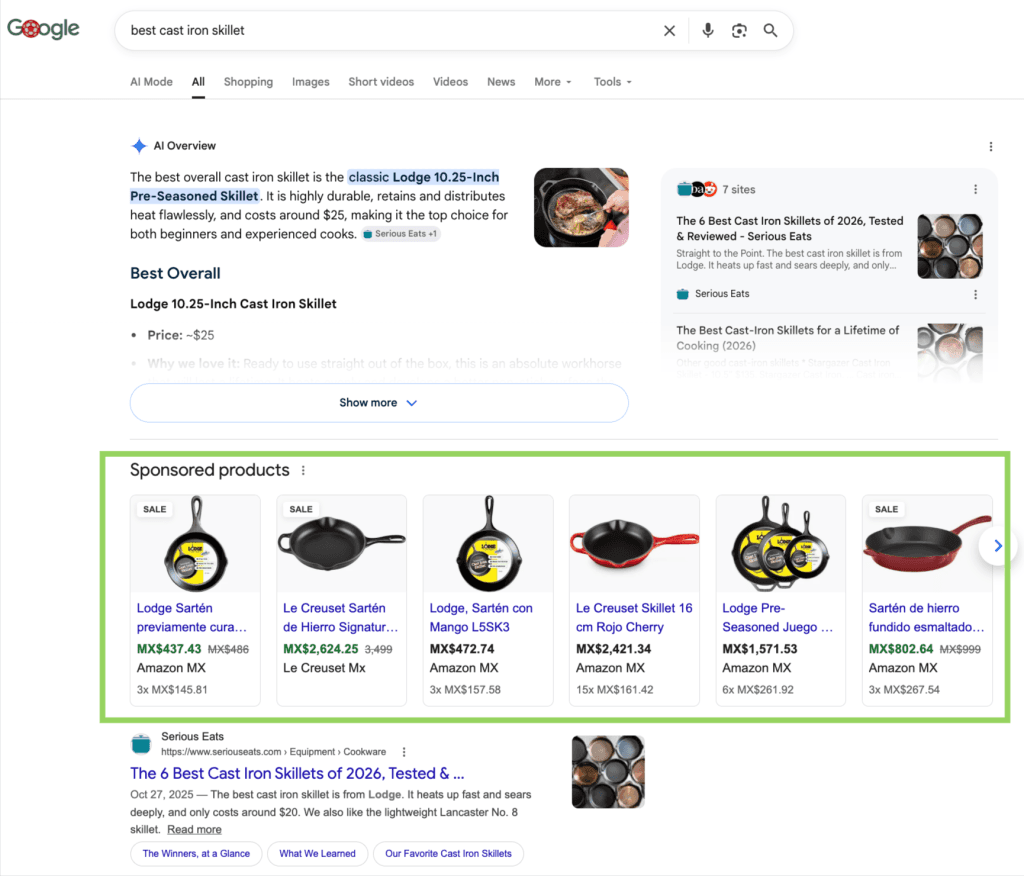
What you’re seeing here is the end result of paid search marketing. It can be a valuable tactic in your marketing strategy, especially when you’re looking to quickly drive traffic to key products and services pages.
But paid search marketing isn’t as simple as giving Google money to post your ad. There’s a lot more to it, and in due time, you’ll understand why even paid search is entirely at the mercy of your website’s content quality, user experience and overall digital marketing strategy.
But First: What Is Paid Search Marketing?
Paid search marketing is any pay-per-click advertising service provided by Google, Bing and other search engines that lets businesses advertise directly on search results pages. Advertisers bid on how much they’re willing to pay each time a searcher clicks on their ad. This fee is called cost per click (CPC). A well-optimized campaign rockets your ad ranking, making your ad spend more efficient.
What’s the Difference Between SEM, PPC and Paid Search Marketing?
Other names for paid search include search engine marketing (SEM), search advertising, paid search marketing or just search marketing. At their core, all of these disciplines fall under the wider umbrella of digital advertising, but paid search has a uniquely granular focus on the keywords and search terms.
You may have also heard paid search used interchangeably with pay-per-click (PPC) advertising. For example, you might find PPC ads on another marketing channel, like Facebook or LinkedIn. Just remember that SEM campaigns are focused entirely on driving traffic from search engine results pages back to your website, making them a cornerstone of any robust search strategy.
What’s The Difference Between Paid Search and Organic Search?
Digital marketing experts may use a two-pronged approach when attracting traffic from search engines. The first method, described in the previous section, uses paid advertising networks to deliver contextual messages within search engine results. The second method uses search engine optimization (SEO) to attract organic traffic — which consists of people who naturally find and click on links to your website. In that case, you don’t pay Google anything; your content stands on its own. A balanced digital marketing strategy usually blends both approaches to maximize visibility and conversions.
Why Use Paid Search Marketing?
Search ads can help build brand awareness — they are, after all, the first thing a user will see in SERPs.
The average click-through rate for Google Ads is 3.17% — higher than display ads at 0.46%.
Paid search ads can be a shortcut to your product or services pages, helping you showcase individual products, services or limited-time offers.
They are mostly immune to ad blockers, ensuring your message reaches potential customers without interruption.
Built-in conversion tracking tools let you measure every click, lead and sale — giving you unmatched insight into campaign performance.
Long story short, paid search gives you a decent bang for your buck. When executed with a clear paid search strategy, the channel can serve as a powerful engine to drive traffic, nurture prospects and accelerate revenue.
The Benefits of a Paid Search Campaign
Paid search campaigns offer several unique advantages for marketers:
Immediate visibility: Unlike organic SEO, paid search ads can put your brand at the top of SERPs instantly, allowing you to quickly reach your target audience and drive traffic that matters most.
Precise targeting: You can target users based on keywords, location, device, time of day, demographics and more — ensuring your ads reach the right people at the right time with the most relevant search terms.
Flexible budgeting: Paid search platforms allow you to control your ad spend, set daily limits and adjust bids in real time to maximize ROI.
Measurable results and conversion tracking: You can track every aspect of your campaign, from impressions and clicks to conversions, making it easy to optimize performance and justify investment to stakeholders.
Scalability: Whether you’re a small business or a large enterprise, you can scale paid search campaigns to fit your goals and budget, complementing other paid media efforts and amplifying overall marketing impact.
Examples of Paid Search Marketing
The three most common types of paid search ads that will appear in SERPs are:
1. Paid Search Listings
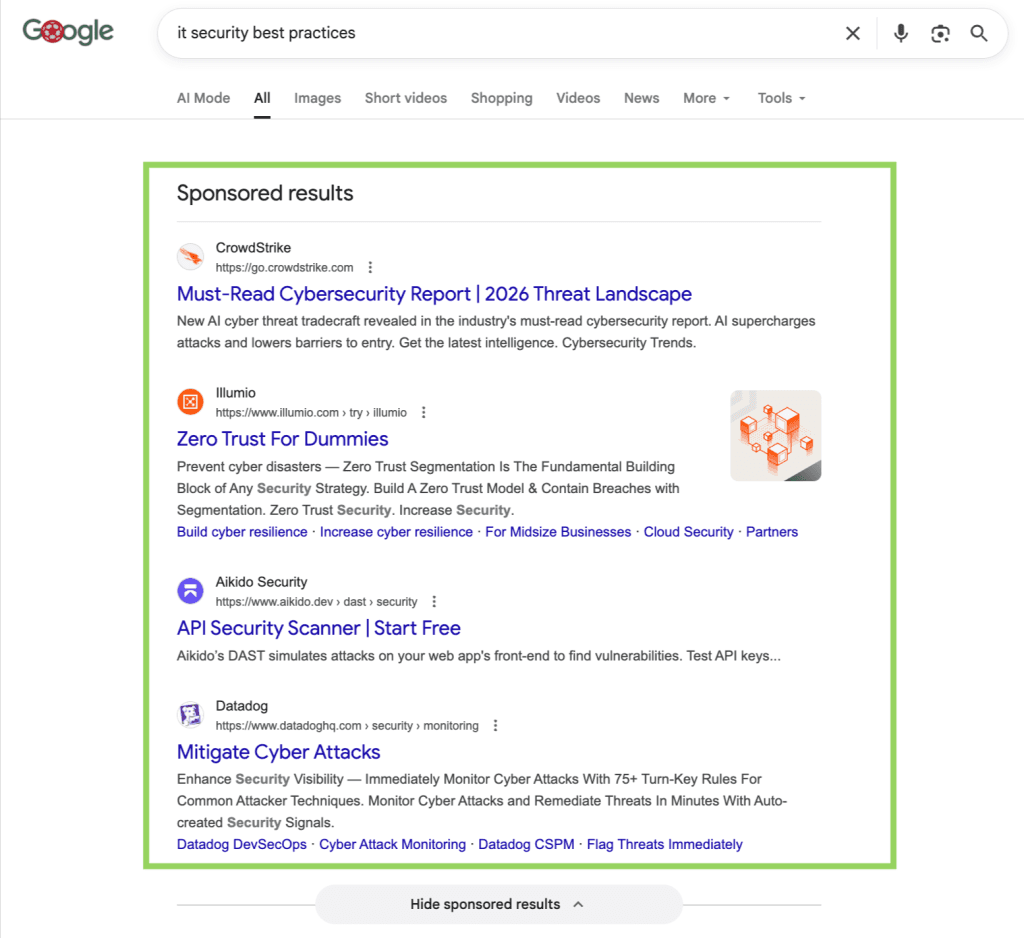
These text ads display as links to webpages at the top of SERPs and are accompanied by a “Sponsored Results” heading, plus title tags and meta descriptions. They rely on carefully selected bidding keywords and smart match types to secure prime positions:
2. Shopping Listings
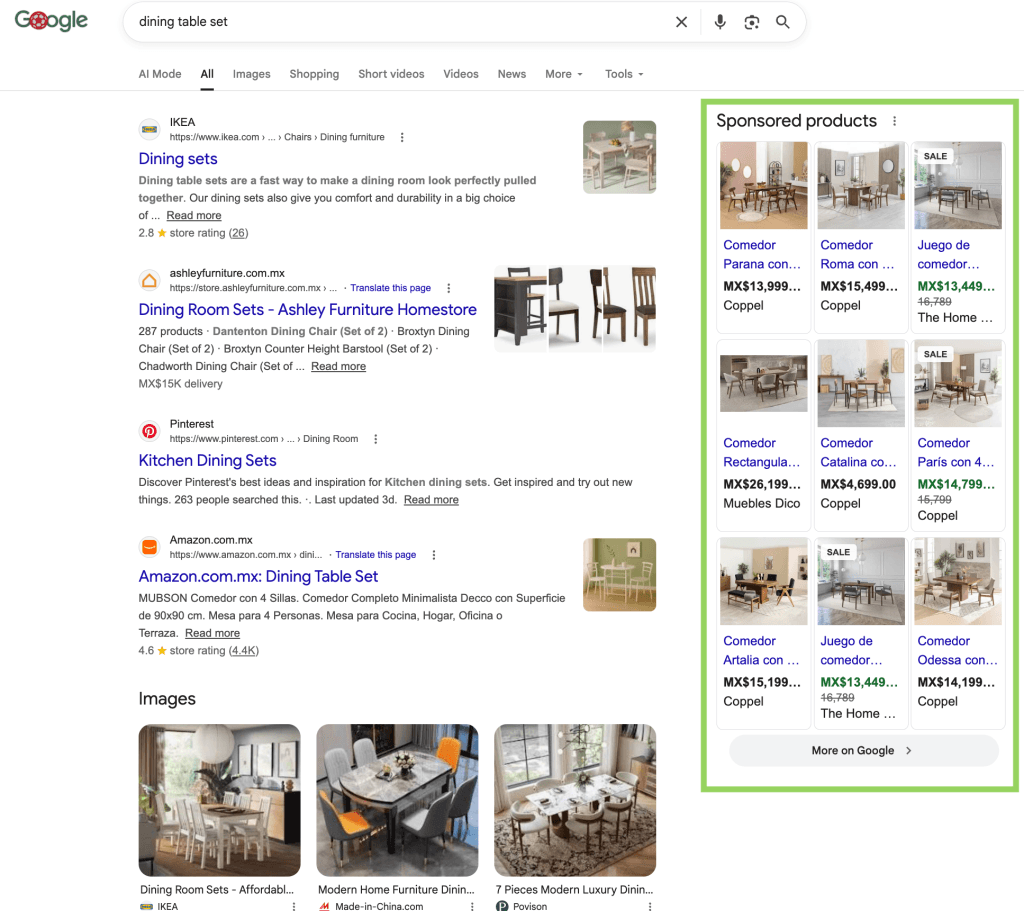
These will usually appear as a “Sponsored Products” heading in SERPs and show product listing ads that lead directly to an online point of sale. Google Shopping ads are a prime example, offering a visual component that boosts user engagement, click-through rates and ultimately conversion rate by showcasing your products’ unique value propositions.
3. Local Services Ads
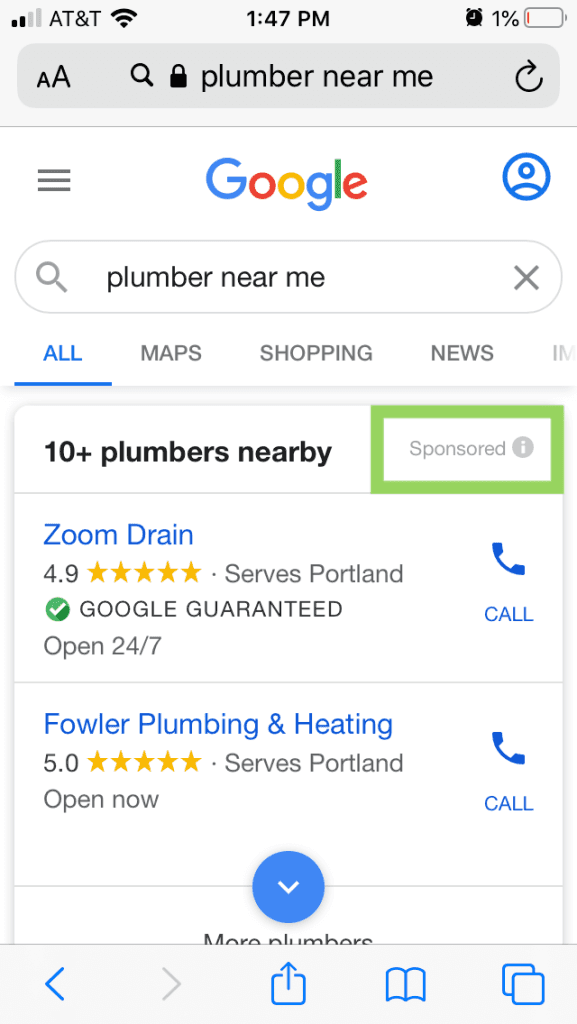
Local services ads are sponsored listings for services in your area; to serve these ads, Google has to know your location. Unlike shopping and text ads, Local Services Ads function on a cost-per-lead basis, with a lead counting as phone calls, bookings or messages made directly through the ad. They’re ideal for driving qualified local traffic and ensuring your products and services appear exactly when people nearby need them.
How Paid Search Marketing Works
Key Terminology at a Glance:
Monthly search volume: Number of searchers for a keyword per month.
Impression: When your ad is shown on a page.
Click: When a user clicks on your ad.
Click-through rate (CTR): The percentage of times an impression leads to a click.
Conversion: When a user completes a desired action once they arrive at your ad’s page.
Conversion rate: The percentage of users who visit your page and complete the desired action.
Average cost per click: How much each click costs on average.
Conversion tracking: The practice of monitoring and attributing actions (sales, sign-ups, downloads) back to specific ads or keywords to evaluate ROI and enhance optimization.
Paid search starts with Google Ads, formerly known as Google AdWords. Chat GPT ads, Bing Ads and Microsoft Ads are options too, but we’ll be focusing on Google Ads for the purpose of this guide.
At a bird’s-eye view, this is how it works:
The advertiser (you) chooses a campaign type (text, shopping, etc.) in Google Ads and sets parameters, including location, for your campaign.
The advertiser sets up a daily budget for their PPC ad, ensuring alignment with broader digital marketing strategy and paid media forecasts.
The advertiser selects keywords they want their ad to list for and decides on their bid. This stage is all about analyzing match types, bidding keywords strategically and predicting how much each click will cost.
The advertiser creates the ad, or multiple ads for Responsive Search Ads; Google will match headlines and descriptions to find the best fit.
Each time a user searches for one of the keywords, Google decides who will get the top spots based partly on bid and partly on ad quality, ultimately influencing where the ad lands on the search engine SERPs.
Sounds simple enough, but don’t get too comfortable. Paid search campaigns have the potential to be highly successful lead generators or colossal wastes of money, and Google is very particular about which ads it will list for specific keywords. A thoughtful search strategy and rigorous conversion tracking are critical to staying profitable.
How To Launch and Manage a Paid Search Marketing Campaign
1. Choose Your Keywords
Once you’ve chosen your type of ad campaign, location and other details (Google Ads makes this part fairly intuitive), it’s time to pick your keywords. Good keyword selection lays the groundwork for a successful paid search strategy that can scale alongside your business goals.
Google’s Keyword Planner tool helps you find keywords that searchers are using to discover products and services similar to yours. But the data it provides for each search query isn’t very precise or compelling. For more accurate numbers including monthly search volume, competition and average CPC, consider looking into keyword research tools like Semrush, Ahrefs, Moz Keyword Explorer or KWFinder. Ubersuggest is a free alternative.
Pay Attention to Intent
As you choose your keywords, start by considering intent — is the user looking for information, to complete a transaction or are they trying to navigate to a specific page? This is crucial — if your ad or its content does not align with the intent of the keyword, it will fail at “go.” Accurate intent alignment is one of the biggest benefits of paid search, because you can tailor ads that speak directly to the customer’s immediate need.
The easiest way to discover intent is to search those keywords and see what types of pages are generated. Are they blog posts? Product pages? Landing pages?
Know Your Keyword Types
There are six main types of keywords to consider as you plan your ad campaign:
1. Branded Keywords
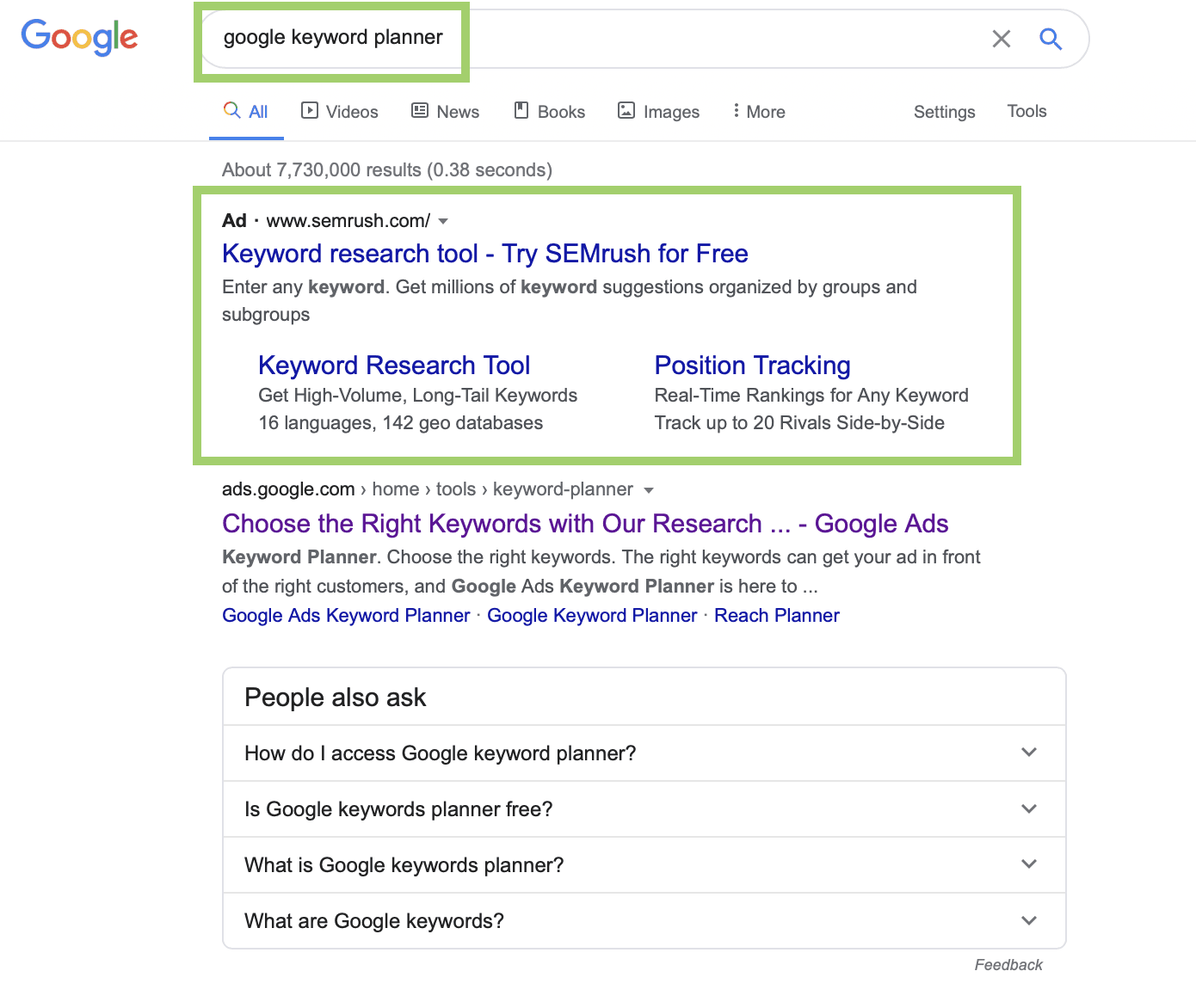
“Leatherman multi-tool” is an example of a branded keyword. Branded queries typically have higher conversion rates and less competition, which usually means lower CPC. Brands don’t usually try to rank for other brands. Then again, sometimes they do (this is called conquesting). It could be an attempt to steal traffic and potential customers from the competition. Or it could be an attempt to divert a user from a free tool to a paid one. In this example, the top paid result for the keyword “Google keyword planner” was occupied by Semrush, a different keyword research tool:
2. Generic Keywords
“Cloud computing” is an example of a generic keyword. These phrases tend to have a higher search volume because they’re so general. This also means they’re typically more competitive — and more expensive — than branded keywords. It also means that they’re less targeted. “Cloud computing,” for instance, has mixed intent — the audience could be looking for a definition, an example, a specific service type of cloud computing, etc. Ranking for a generic keyword might win you many clicks, but a lot of those clicks might be from undesirable users who immediately leave (and remember, you pay for every one of those clicks).
3. Long-tail Keywords
“How to integrate Apple Calendar with Google Calendar” is an example of a long-tail keyword. Like most other long-tail keywords, it asks a very specific question. Most long-tail keywords have informational intent, but some are very clearly commercial. For example, the keyword “the best multi-tool for camping” is a pretty solid indicator that this searcher is a camper who’s looking to buy a multi-tool.
4. Related Keywords
Think of these as generic keywords that are indirectly related to your product offering. For instance, if you sell cloud storage, a related keyword might be “cloud security” or “Is the cloud safe?” They aren’t directly tied to your product or service, but someone who is searching for them might have an interest in what you’re selling.
5. Negative Keywords
Negative keywords are keywords that you actively exclude from your Google Ads campaign. Google Support provided the example of an optometrist who sells glasses excluding terms like “wine glasses” or “drinking glasses” from their paid search campaigns. The keywords have similar verbiage but are in no way relevant (another example of why searcher intent is so important).
6. Competitor Keywords
Remember how brands sometimes compete for branded keywords that don’t belong to them? Well, that would be an example of targeting competitor keywords. For instance, Nike might attempt to compete with Adidas for paid search real estate by bidding on the keyword “Adidas sneakers.”
Choose Your Match Type
When you select a keyword, Google lets you decide how many iterations of that keyword you want to compete for. Specifically, it gives you three main options (collectively known as match types):
Exact match: Your paid search ad will only be considered when users search for the exact keyword; for instance, if you bid on “large planter,” your Google ad would not be considered if someone searched the phrase “large planters” or “large planter for succulent.”
Phrase match: Your ad will only be considered when users search for the exact phrase with words before or after it. So in this case, “large planter for succulent” would consider your ad if you bid on “large planter.”
Broad match: Your ad will be considered if the searcher uses your keyword phrase — and synonyms — in any order (e.g., “large red planter” or even “planter for big succulent”).
2. Create Engaging Ads
When creating your paid search campaign, always keep in mind a potential customer. This is where buyer personas will help you develop ads that truly engage your target audience. When creating your ad, these are the core elements that will directly affect whether your ad ranks and how users interact with it. In order of importance, they are:
What page you link to: Simply put, it needs to be relevant to the keyword you’ve selected; otherwise, it doesn’t stand a chance against the competition. Think carefully about what action you want a user to take upon clicking your ad and make sure that the page you link to encourages that action and offers a frictionless landing experience.
Headline Assets: This is the text that forms the title of your ad. Google requires you to create a Responsive Search Ad (RSA), where you must provide at least 3 and up to 15 unique headlines, each at a maximum of 30 characters. Google’s AI dynamically mixes and matches these assets, displaying up to three headlines side-by-side depending on how the ad is viewed (e.g., on a mobile device vs. a desktop). Because any of your headlines can appear in any order, each one needs to make sense on its own, though you can use “pinning” to force a critical headline to always stay in the first position.
Description Assets: This is the text that appears underneath your headlines. It’s an essential piece of ad copy that needs to resonate with your target audience. You must provide at least 2 and up to 4 unique descriptions, and Google will dynamically display up to 2 at a time. You have a maximum of 90 characters to work with per description, so you need to prioritize the most important information. Make sure you include your target keywords, highlight any timely promotions and use action-oriented language that encourages users to click.
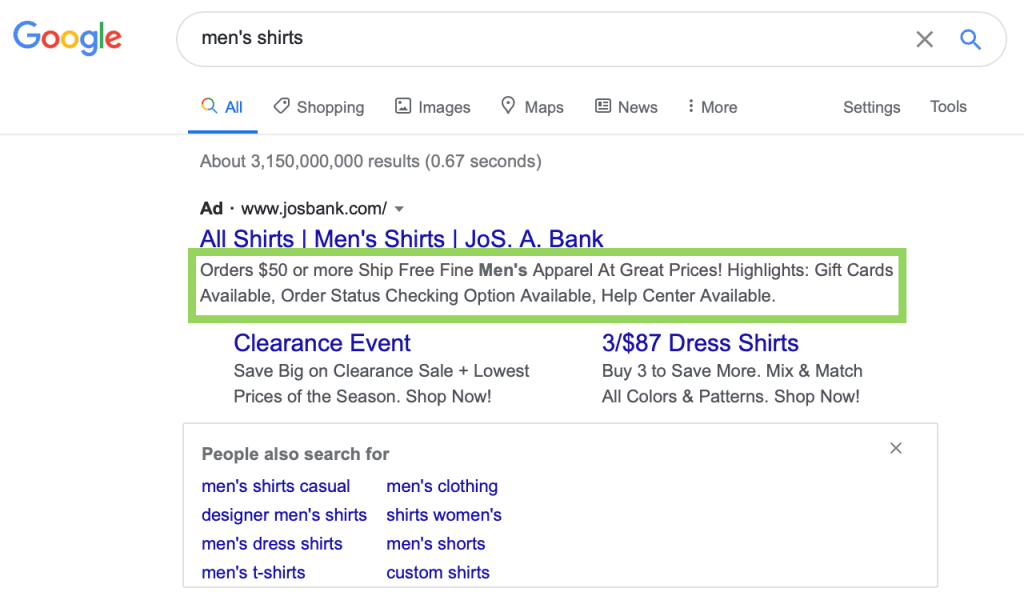
Assets: There are multiple types of assets you can add to an ad at no additional CPC. These include sitelinks (additional links to specific pages), call assets (a phone number), location assets, image assets and callout assets (highlighting unique selling points).
3. Monitor Your Quality Score
As you consider your approach to PPC management, keep in mind that Google uses advanced algorithms to determine the quality of your ads and their destinations. If your landing pages provide an excellent user experience, your ads are more likely to appear in relevant search results and cost you less per click.
There are three main components Google looks at during the live auction to determine your Ad Rank (which decides your ad’s position on the SERP):
Your bid: The maximum amount you are willing to pay for a click on a specific keyword.
Auction-time quality: Google looks at how relevant your ad text is to the search, your expected CTR and the quality of your landing page experience.
Search context: This includes factors like the user’s location, device, time of day and the nature of the search terms.
Quality Score (rated 1–10) helps you see how well your ads meet these criteria compared to competitors.
Now, here’s the best part about Ad Rank: Because ad quality and expected CTR are such heavy factors, the highest bidder isn’t always the winner. You can actually beat out competitors who are bidding more money if your ads are highly relevant and your landing page experience is superior. High-quality web content lets you punch above your weight and really stretch your PPC budget.
On The Very Important Matter of SEO…
Paid search is not a substitute for search engine optimization (SEO).
SEO is very different from SEM; it’s how you improve your unpaid search rankings. In fact, you should think of paid search as merely a complement to your SEO efforts. The first four organic search positions can have a substantially higher CTR and a much lower CPC ($0.00).
Not to mention, because of the Quality Score, your PPC campaign will flounder without high-quality content.
Is PPC Harder Than SEO?
PPC and SEO each come with their own challenges. PPC can deliver immediate results, but it requires ongoing investment and constant management — ad spend, keyword bids and creative optimization must be closely monitored to avoid wasted budget. SEO, by contrast, is a long-term strategy that takes time to show results but can deliver sustained traffic at a lower ongoing cost once established. Many marketers find PPC more challenging in terms of day-to-day management and complexity, especially with frequent platform updates and the need for rapid adjustments. However, SEO requires patience, technical expertise and content development. Ultimately, which is “harder” depends on your resources, goals and expertise.
Don’t Forget To Track ROI
Phew. That was a lot.
But you’re not quite finished.
It’s important to track the ROI of your paid search campaigns, which is something you can do through your Google Ads account. Conversion rate is especially important to keep a close eye on, and robust conversion tracking is the only way to understand whether your ads are truly driving revenue.
Going into your campaign, you’ll need to establish how much money you’re willing to pay per conversion. According to WordStream’s 2025 Google Ads Benchmarks, the average conversion rate across industries is approximately 7–8%, though it varies significantly by sector — home services and legal tend to run higher, while IT and B2B services run lower. A 2–6% conversion rate is generally considered a solid benchmark for campaign evaluation.
If you’re willing to pay $40 per conversion and your average CPC is $1, you would need a 2.5% conversion rate. As you run your ads, pay attention to your conversion rate, your average CPC and how much money you’re spending per conversion. As you go along, you may need to recalibrate your expectations/goals and/or adjust your search strategy to maximize ROI.
OK, now we’re finished.
And if the statement that “paid search marketing isn’t as simple as giving Google money to post your ad” didn’t resonate with you at the beginning of this post, I bet it does now.
Editor’s Note: Updated June 2026.


